ENG
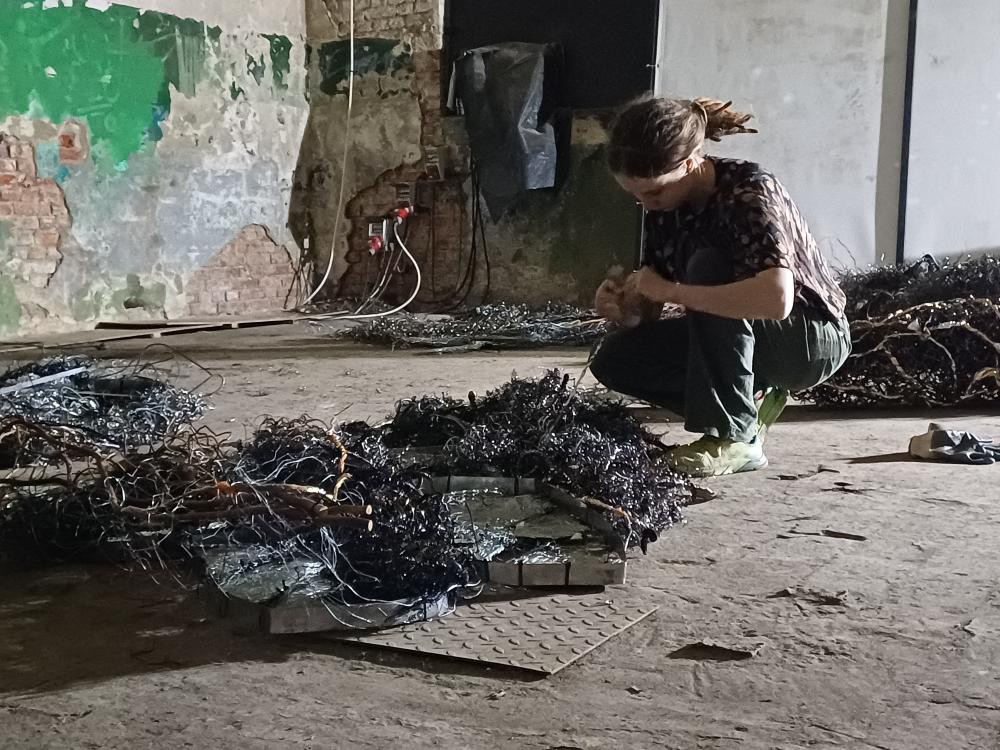
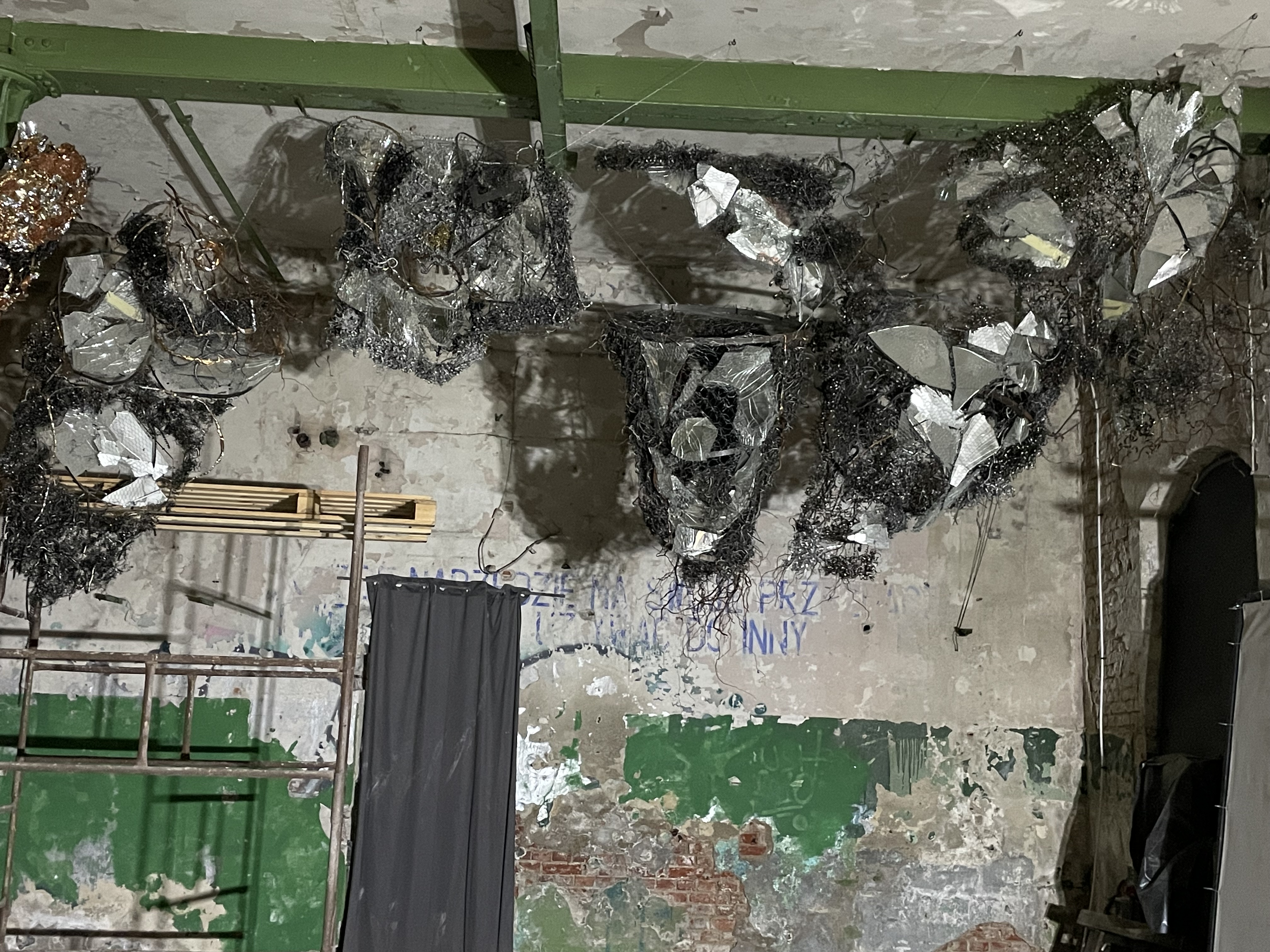
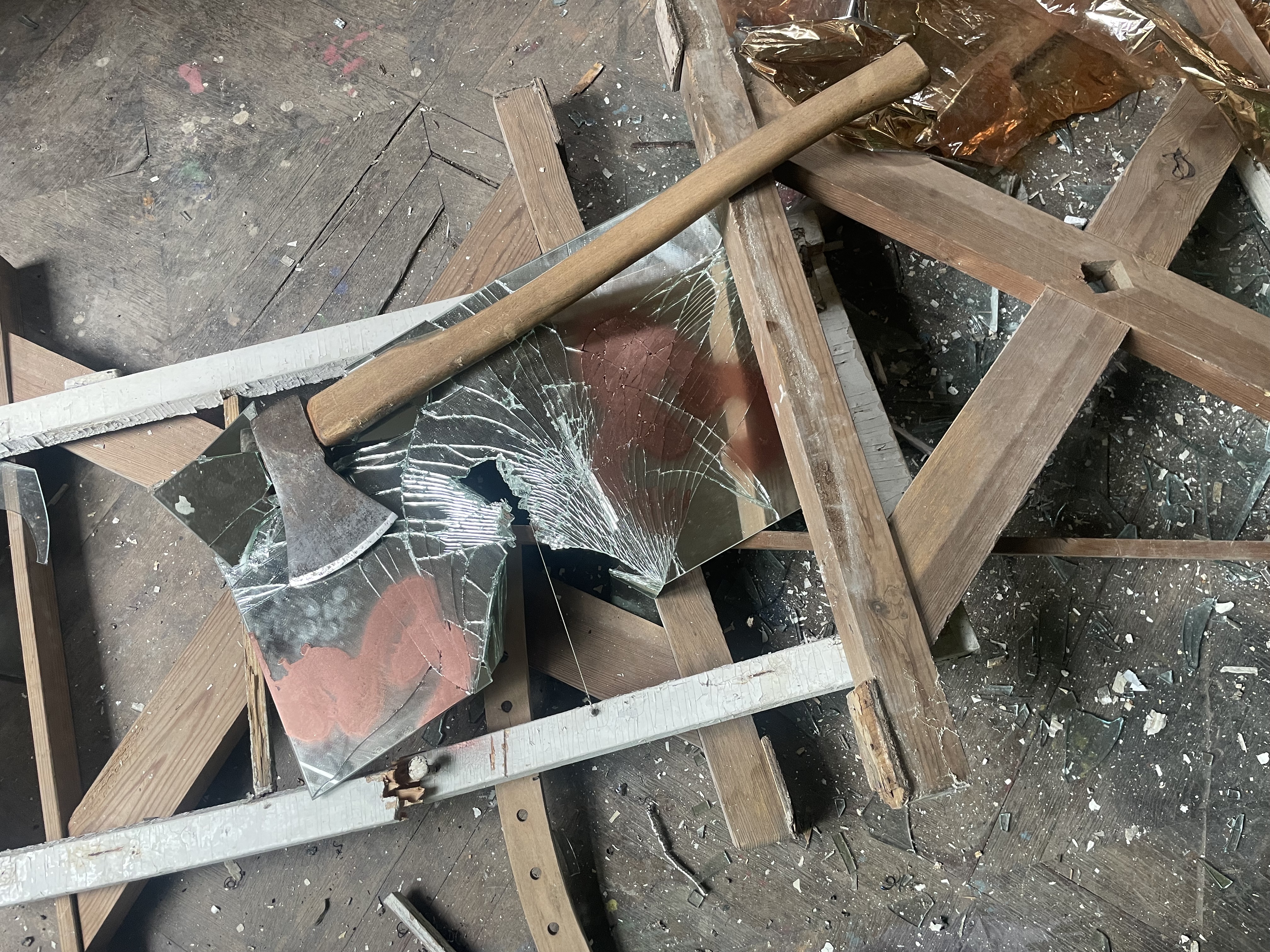
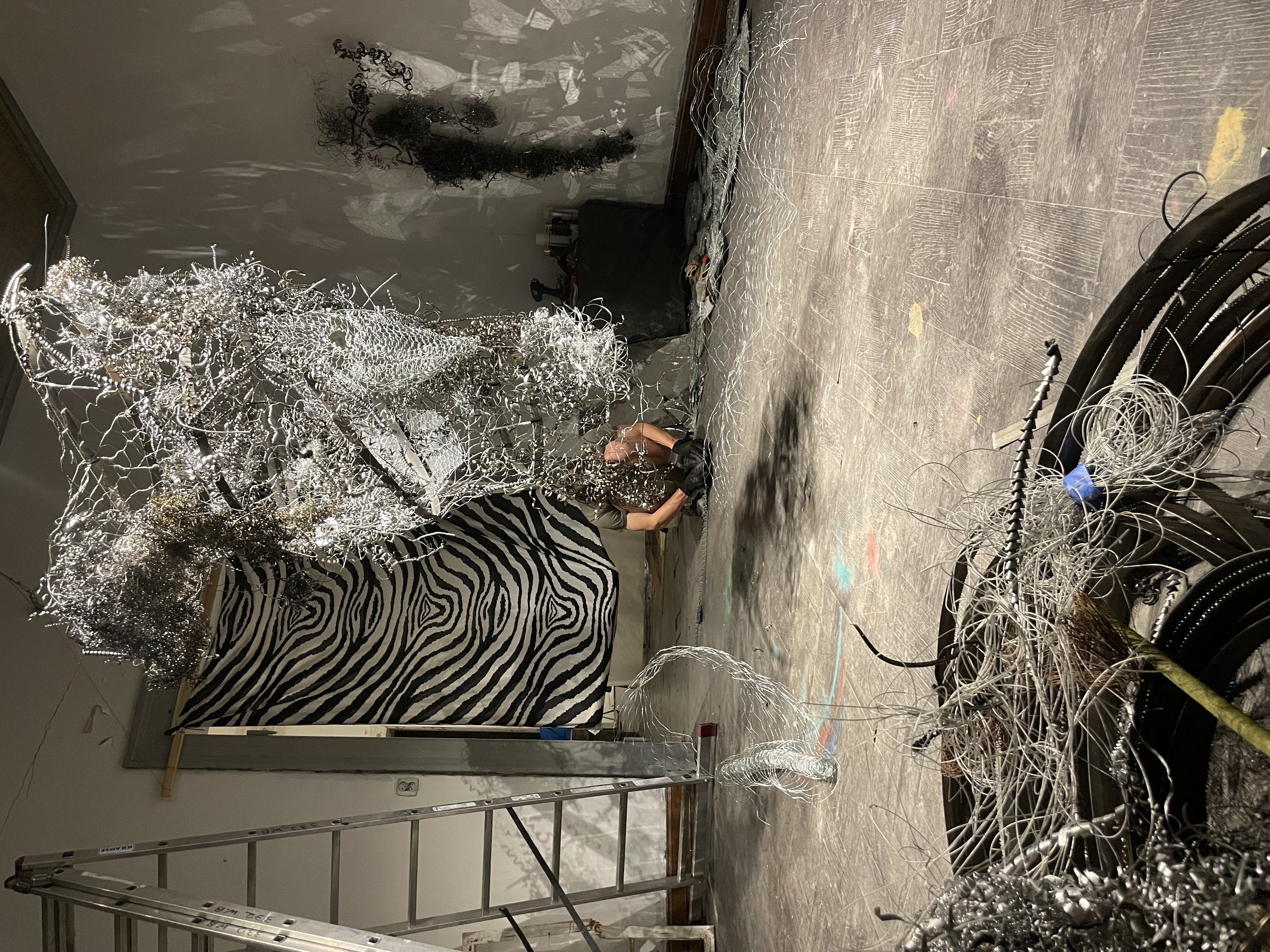
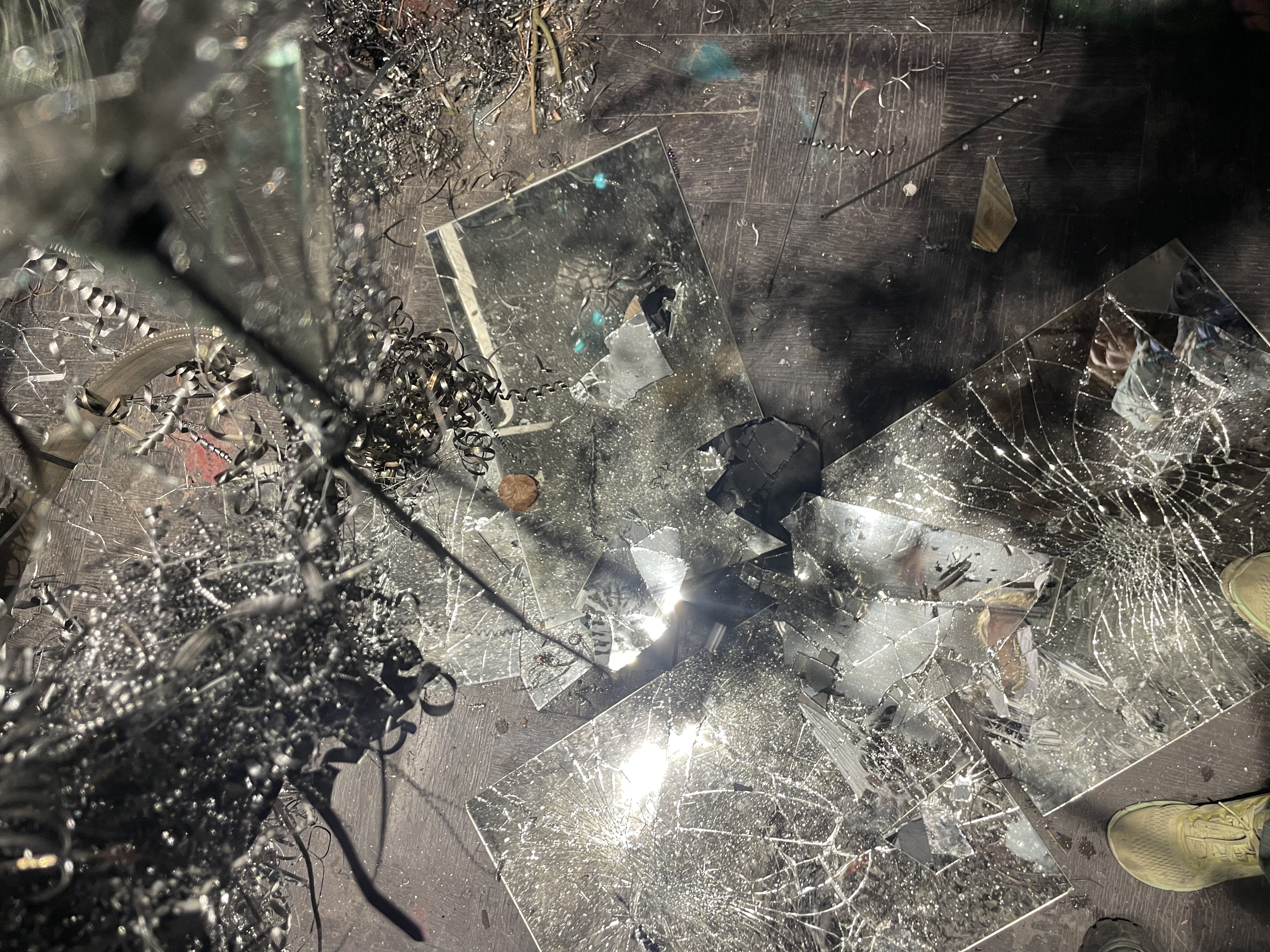
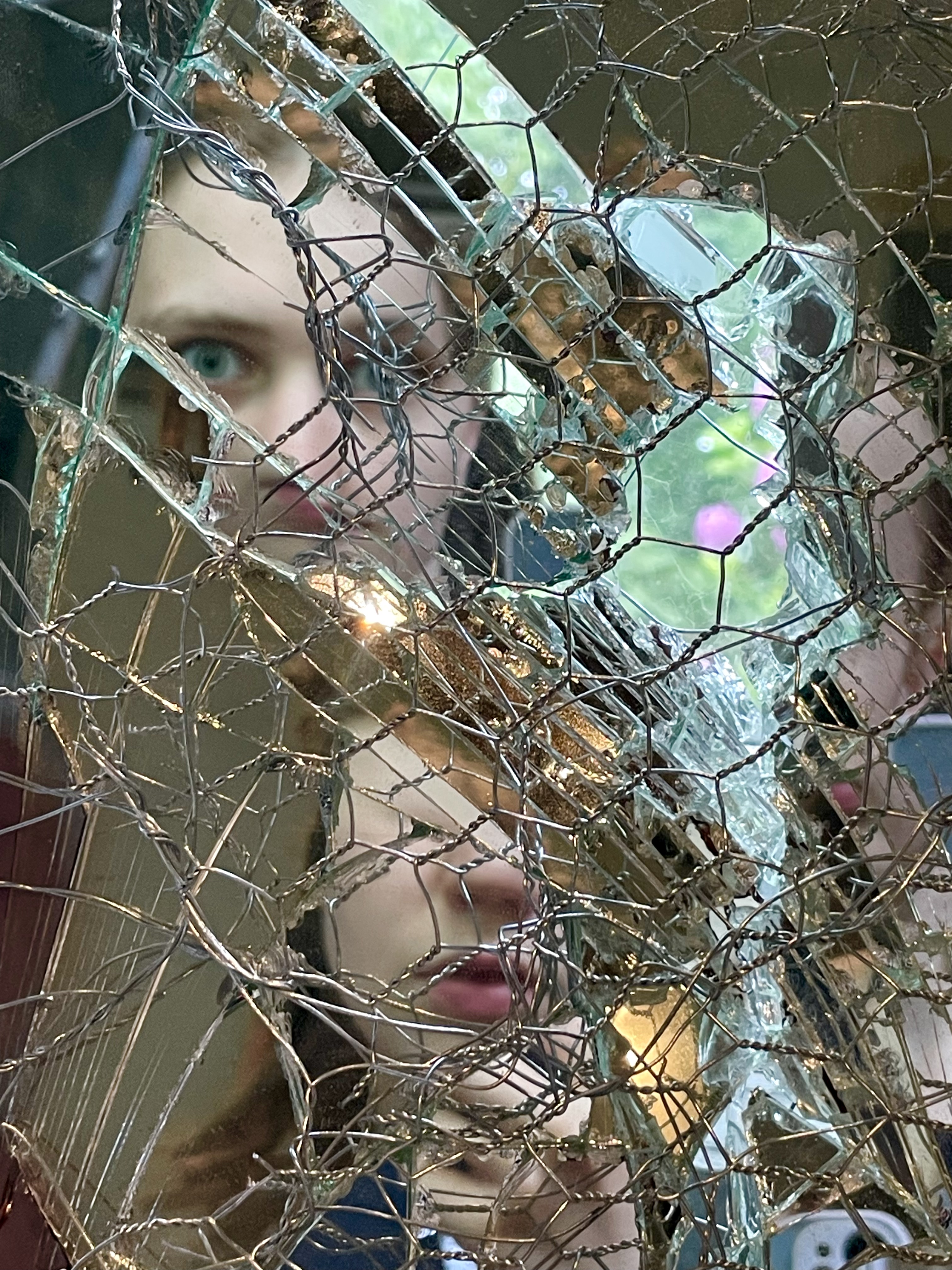
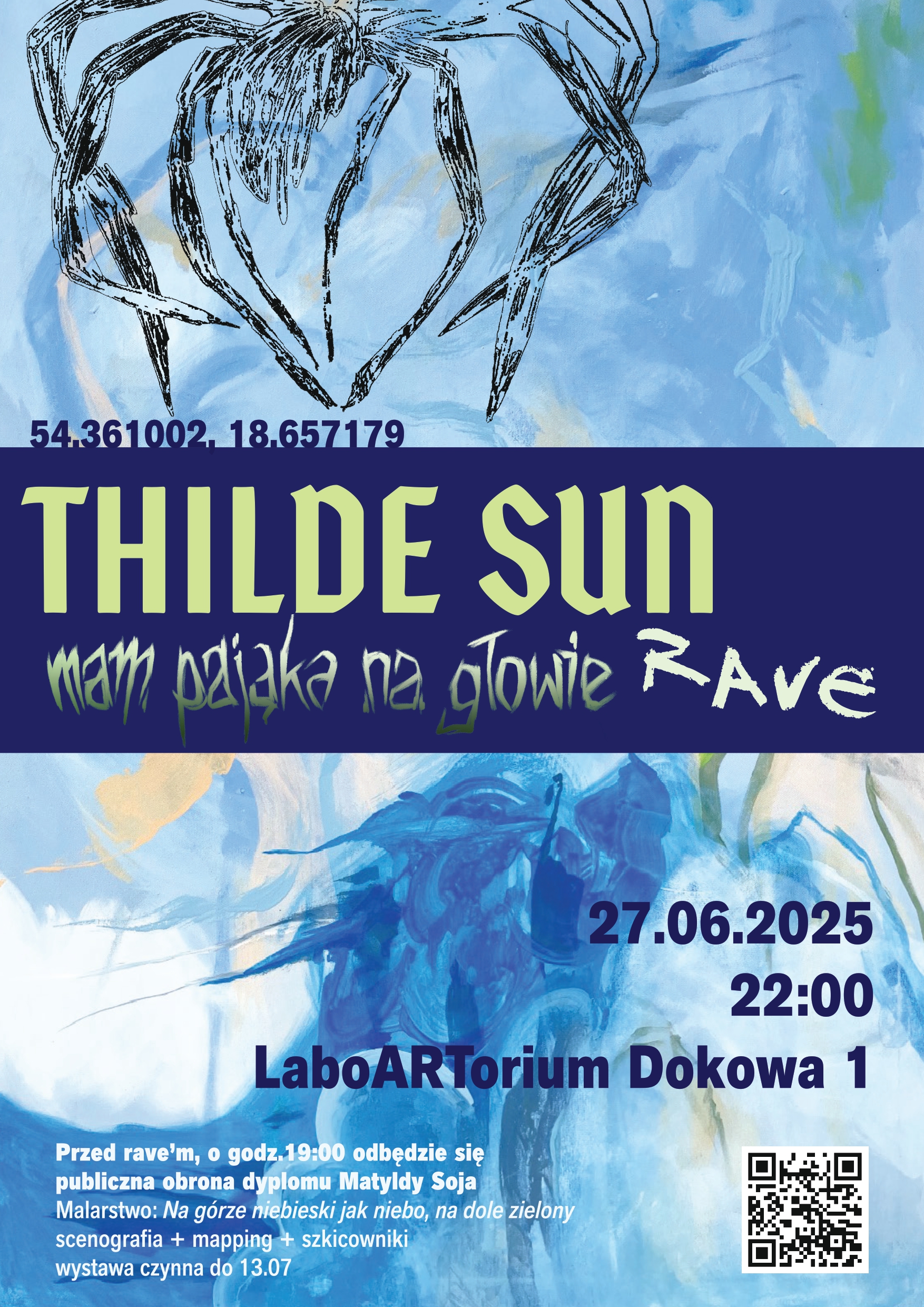
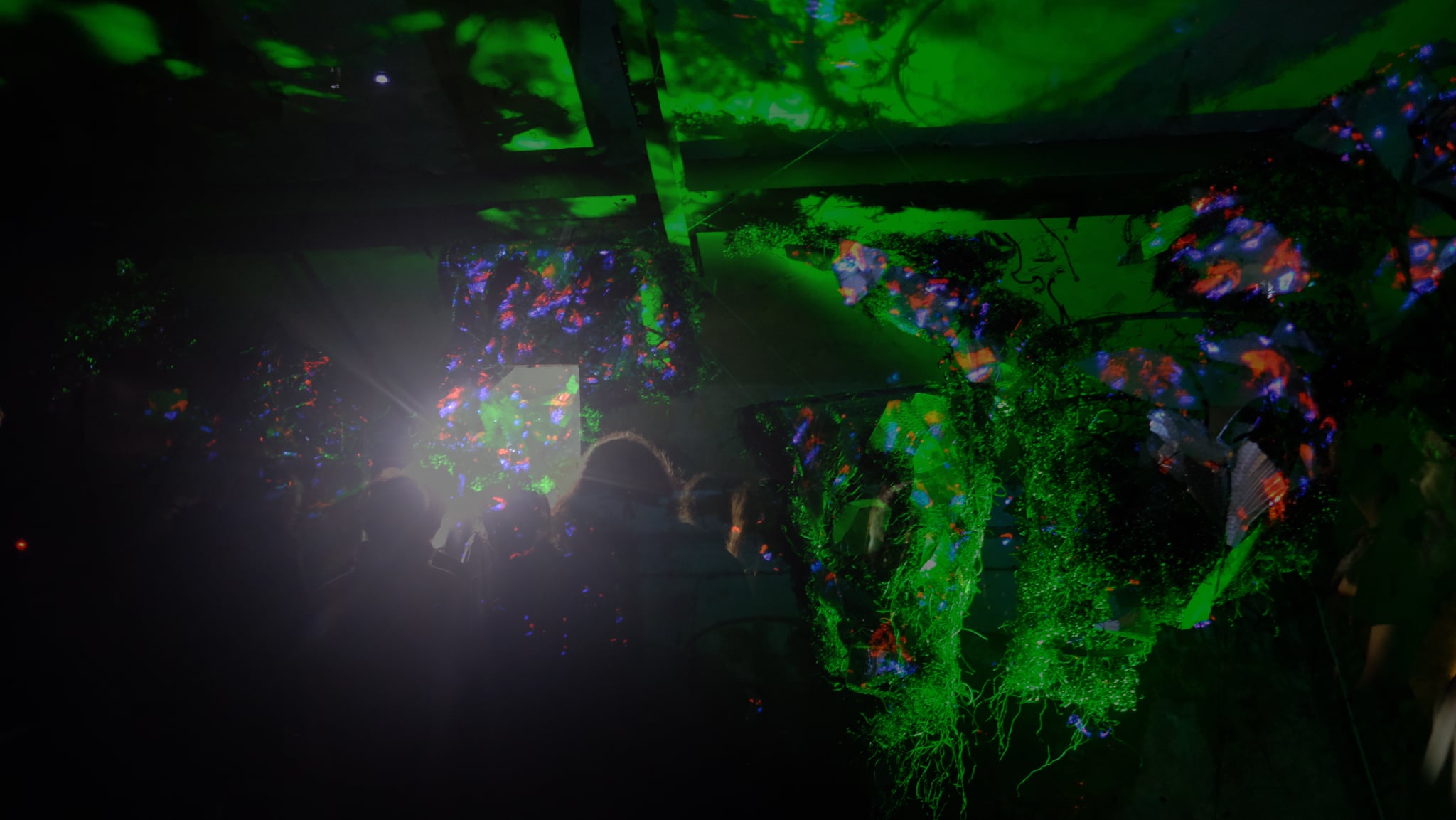
The installation is constructed from mesh, metal shavings, and shattered mirrors. It is a collection of objects arranged in space to form a giant spider—
a figure both personal and symbolic. For me, the spider used to be the embodiment of discomfort—something I instinctively feared and found repulsive. This lasted until one day, as a child, I decided to face it. Gradually, through repeated interactions with real spiders, I crossed the barrier of fear until it vanished completely. This moment of transition—the process of overcoming an instinctive reaction—became the key to this work.
The spider has become a symbol of a conscious departure from one's comfort zone. I call this a "mental somersault"—a deliberate intervention in and modification of one’s own consciousness. It is about dismantling mental barriers, shedding successive fears, and steering one's own emotions. It is a refusal to yield to instinct, choosing instead to recalibrate it and test whether what I perceive can be perceived differently.
A spider has eight legs, while I have only two; therefore, as part of this work,
I invite others whose energy resonates with me to join in weaving the spider from metal shavings. I do not break the mirrors for the spider’s eyes alone—we share those "seven years of bad luck" among many, and the result is moments of uninhibited creative ecstasy. This is not only a symbol of breaking superstitions but an act of courage and an expansion of one’s comfort zone. Each mirror fragment is a small gesture: personal and often emotional. The spider becomes a mosaic of these experiences—mine and others'. The projection mapping displayed in the spider’s eyes contains my narratives: visual stories of what it means to transcend oneself, to enter the space of discomfort, and to feel at home within it. It is a place where strength is built from fear.
/
PL
Instalacja zbudowana jest z siatki, wiórów metalowych i potłuczonych luster. To zbiór obiektów umieszczonych w przestrzeni na kształt wielkiego pająka — figury osobistej, a zarazem symbolicznej. Pająk jest dla mnie uosobieniem dyskomfortu — tego, czego instynktownie się bałam, co mnie odrzucało. Aż do momentu, kiedy pewnego dnia, jeszcze jako dziecko, postanowiłam się z tym zmierzyć. Stopniowo, z każdą kolejną interakcją
z rzeczywistymi pająkami, przekraczałam barierę lęku — aż zupełnie przestałam się bać.
I ten moment przejścia, ten proces wychodzenia z instynktownej reakcji, stał się kluczem do powstania instalacji.
Pająk stał się dla mnie symbolem świadomego wyjścia ze strefy komfortu. Teraz nazywam to rodzajem “fikołka mentalnego” – to celowe ingerowanie
i modyfikowanie własnej świadomości. Zdejmowanie barier mentalnych. Pozbywanie się kolejnych lęków, sterowanie własnymi emocjami. Nie uleganie instynktownym reakcjom tylko dostosowywanie ich i sprawdzanie czy to co mi się wydaje może mi się wydawać inaczej.
Pająk ma aż osiem nóg a ja tylko dwie, dlatego w ramach pracy zapraszam innych ludzi, których energia do mnie przemawia do wspólnego plecenia pająka
z metalowych wiórów. Luster z których powstały pajęcze oczy również nie tłukę sama, dzielimy te siedem lat nieszczęścia pomiędzy wiele osób a ilorazem okazują się chwile nieskrępowanej twórczej ekstazy. To nie tylko symbol przełamywania przesądów, ale też akt odwagi, przekraczania własnej strefy komfortu. Każdy fragment lustra to mały gest: osobisty, często emocjonalny. Pająk staje się zlepkiem tych doświadczeń, moich i cudzych. Mapping, wyświetlany w oczach pająka, zawiera moje narracje – wizualne opowieści o tym, co znaczy przekraczać siebie, wchodzić w przestrzeń dyskomfortu i czuć się w niej dobrze. To miejsce,
w którym z lęku buduje się siłę.
ENG
I diagnose the present as: a spider.
A spider, as we know, is small. At most, modest in size. One could say: subtle. Easy to miss, easy to be caught off guard by. It has an incomprehensible number of hairy appendages. Four pairs of walking legs (meaning as many as eight legs!) and two pairs of mouthparts (does it bite?). With such a clutter, it is impossible to know which of them is the most important; does the spider itself tell them apart and have its favorite leg? As if that were not enough, this spider also has a cephalothorax and an abdomen. Inside, it probably has a gut. In the end, everything that lives has some kind of gut inside.
Such a gut accommodates various small creatures. The human individual, for instance. The individual has a way of performing a permanent performance within the gut, whether they want to or not. Through their actions, individuals affect one another, the gut as such, and the spider.
The spider weaves a web. It moves with that grotesque stride of eight legs and weaves. The web demands its commitment. Each one is slightly different; the spider’s legs will arrange themselves differently, individuals will arrange their thoughts differently, and so the threads will intertwine differently too. A thread is easily destroyed. Yet he weaves, over and over again, for what would a spider do if he did not weave?
Confrontation with the spider provokes reactions. Arachnophobia and other such milder forms of feeling. Like resentment, a sense of dominance, or awe. What is hardest to find in this relationship is certainty.
We can engage in an interaction with the spider. Most often, the spider is the passive party in the interaction. It can be stepped on, washed away, carried out, or ignored. One can also try to engage in a non-standard form of interaction with it.
What to do with a spider?
Functioning in a world marked by the spider, the individual seeks their own answer to the need for a comfort zone.
/
PL
Stawiam teraźniejszości diagnozę: pająk.
Pająk, jak wiadomo, jest mały. W porywach nieduży. Można powiedzieć: subtelny. Łatwo go przegapić, łatwo dać mu się zaskoczyć. Ma niepojęte ilości włochatych odnóży. Cztery pary odnóży krocznych (a więc aż osiem nóg!) i dwie pary odnóży gębowych (czy gryzie?). Przy takim natłoku nie wiadomo które z nich jest najważniejsze; czy pająk sam odróżnia je i ma swoją ulubioną nogę? Jakby tego było mało jest w tym pająku jeszcze głowotułów i odwłok. W środku prawdopodobnie ma kiszkę. Ostatecznie wszystko co żyje ma w środku jakąś kiszkę.
W takiej kiszce mieszczą się rozmaite żyjątka. Chociażby jednostka ludzka. Jednostka ma to do siebie, że, chcąc nie chcąc, prowadzi w kiszce permanentny performance. Swoimi działaniami jednostki oddziałują na siebie nawzajem, na kiszkę jako taką. I na pająka.
Pająk przędzie pajęczynę. Przemieszcza się tym swoim groteskowym krokiem ośmiu nóg i przędzie. Pajęczyna wymaga od niego zaangażowania. Każda z nich jest troszeczkę inna, inaczej ułożą się pajęcze nogi, inaczej jednostki ułożą swoje myśli, więc i nici inaczej przeplotą się ze sobą. Nić łatwo ulega zniszczeniu. A on przędzie, ciągle od nowa, bo co miałby robić pająk, jeśliby nie prządł?
Konfrontacja z pająkiem prowokuje reakcje. Arachnofobię i inne takie, łagodniejsze formy odczuwania. Jak niechęć, poczucie dominacji czy zachwyt. Najtrudniej jest w tej relacji o pewność.
Możemy podjąć interakcję z pająkiem. Najczęściej w interakcji pająk jest stroną bierną. Może zostać rozdeptany, spłukany, wyniesiony albo zignorowany. Można też spróbować podjąć z nim niestandardową formę interakcji.
Co zrobić z pająkiem?
Funkcjonując w świecie naznaczonym pająkiem jednostka poszukuje własnej odpowiedzi na potrzebę strefy komfortu.
ENG
One two three four five six seven eight nine ten
One two three four
The so-called "trigger"
And the so-called - reaction
/
PL
Raz trzy cztery pięć sześć siedem osiem dziewięć dziesięć
Raz dwa trzy cztery pięć sześć siedem osiem dziewięć dziesięć
Raz dwa trzy cztery
Tak zwany "trigger"
I tak zwana - reakcja
AI Website Generator